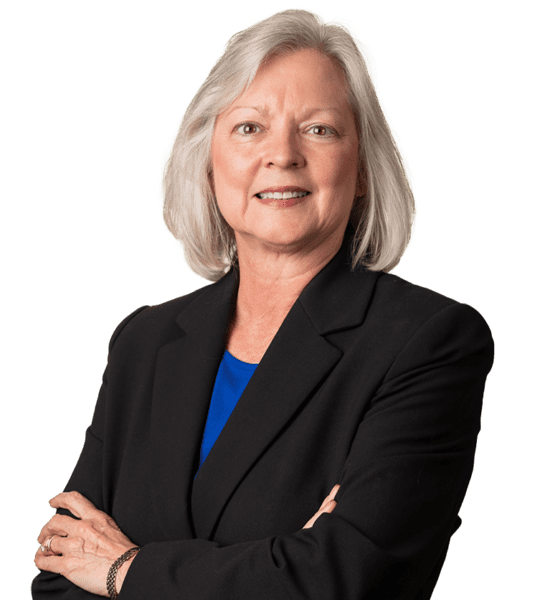
State government relations remains everchanging, especially in the complex and dynamic industry of health care. Organizations, lobbyists and decisionmakers must stay ahead of the curve to achieve success in their business goals. With a combined six decades in health care government relations, McGuireWoods Consulting senior vice presidents Susan Bowling and Dave Richard have established themselves as premiere voices in the sector. They sit down for a Q&A with McGuireWoods Consulting and share their expertise below.
Talk about your background in state health care policy.
Susan Bowling: I spent my entire career in state government working with child abuse and neglect, as well as foster care and health and human services. In 1999, I accepted a position at the Department of Health and Human Services in South Carolina, the state cabinet agency responsible for Medicaid. I worked in various departments within the Medicaid agency, and at the time of my retirement, I was the deputy director of health services and acting director. I retired from the Department of Health and Human Services in 2007 and began a second career as a partner in a management consulting firm specializing in research and analysis, strategy development and government relations. I joined the team at McGuireWoods Consulting in 2021.
Dave Richard: I started out the first 30 years of my career running an organization called The Arc, which serves people with disabilities. With The Arc, I worked in Medicaid public policy in Louisiana, Delaware and North Carolina and learned about the industry through being an advocate for people with disabilities. In 2013, the secretary of Health and Human Services in North Carolina asked me to run the mental health agency, which includes developmental disabilities. I spent two years running the behavioral health system in North Carolina and eight years running the Medicaid program. I left Medicaid in 2023 and have been with McGuireWoods Consulting since then.
What are the changes you are seeing in the health care space at the federal level?
Susan Bowling: The federal government is the largest funder of health care in the United States. Medicare is the single largest payer, followed closely by Medicaid. In terms of beneficiaries, Medicaid covers more people than Medicare. As of 2026, Medicaid covers over 72 million people and is the primary payer for long term care and nursing home services. The biggest impact on these two programs in recent years is the One Big Beautiful Bill Act, or HR1. This legislation will have significant impacts on beneficiaries and providers for many years to come.
Dave Richard: The biggest thing that we are seeing in the health care space is a focus on the public sector. The government is working to see how Medicare and Medicaid programs can become more efficient. Medicaid is a federal and state partnership, and the federal government funds over two-thirds of the program. There is a lot of effort by states to increase federal funds, while the federal government is looking to reduce funding and require the states to cover a larger share of health care costs.
What are the biggest pain points within the industry?
Susan Bowling: Financing is probably one of the major issues in terms of the Medicaid program. South Carolina is one of only ten states that have not adopted the Affordable Care Act’s Medicaid expansion provision. HR1 impacts expansion and non expansion states differently.
For example, HR1 eliminates the enhanced Federal Medical Assistance Percentage (FMAP) incentive for new Medicaid expansion. However, as a non expansion state, many of the provisions of HR1 do not apply to South Carolina or other non expansion state. The major fiscal impact of HR1 for South Carolina Medicaid relates to state-directed payments, a financing mechanism for Medicaid agencies to direct how managed care plans pay providers. Our hospitals are the second largest expenditure line for Medicaid, and they are going to take a huge hit over the next decade with decreases in directed payments.
It is projected that once the annual decreases to the state directed payments for hospitals reach the newly established upper payment limit that the reduction will total more than $2 billion annually. I believe more rural hospitals will struggle to remain viable. HR1 also impacts the use of provider taxes to help fund Medicaid which means more pressure on state budgets.
Dave Richard: Very similarly, North Carolina relies heavily on Medicaid. We are an expansion state as of three years ago. Essentially, the law in North Carolina says that no state general fund money can be used to pay for Medicaid expansion. Because of this, the state uses hospitals taxes to fund expansion.
In addition to Hospital taxes NC used State directed payments to raise the Hospital rates to the average commercial rate, which is significantly higher than the Medicaid or Medicare payments. HR1 will reduce the ability of the state to use director payments to fund this increase We estimate a potential $49 billion funding shortfall.
In addition we will see reductions to the SNAP program. Food is health care, right? With more requirements and eligibility standards, I think we will see less people on the SNAP program, placing more pressure on the state’s health care system. The average cost of health care has been going up, threatening the system’s long term sustainability. We have to figure out ways to better manage the cost of these programs.
What do you see in the future of health care funding and how should clients stay informed?
Susan Bowling: The future is going to be very challenging for Medicaid and on state budgets. The availability of state revenues as well as the willingness of state budget writers to appropriate funding to Medicaid programs are critical to ensure access to services for Medicaid beneficiaries, especially for certain populations such as the disabled. I also think it is worth noting that hospitals cannot turn away a patient while other providers are not mandated to see Medicaid beneficiaries. We work to keep our clients abreast of the economic forecasts for South Carolina and potential implications for health care funding.
Dave Richard: I think this is a big question. There is a lot of emphasis on the midterms right now in Congress. There will be a lot of pressure to reverse some of the items in HR1. If things do not change in Congress, I think the long term impact will mean less people are served by public programs. The funding cuts will affect health care systems, as well as rural communities. Hospitals are often the largest employers in rural areas, presenting a significant economic impact beyond the health care system.